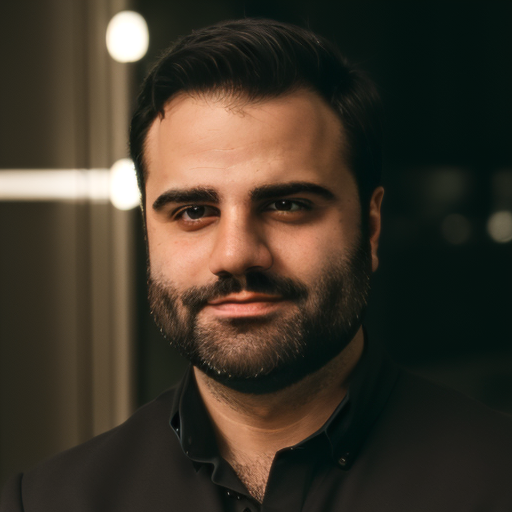
Cameron is a doctoral student in computer science at The University of Southern Mississippi. His work sits
at the intersection of machine learning, political theory, and philosophy: he studies how AI alignment
architectures such as reinforcement
learning from human feedback, Constitutional AI, and rule-based guardrails encode ethical and political
commitments, and what those engineering decisions mean for national security, corporate political speech,
and democratic governance.
He came to the doctorate by an unusual route. After eight years as a professional software engineer,
Cameron returned to school and completed a Bachelor of Arts in philosophy and a Bachelor of Science in
political science at Southern Miss in December 2025, earning a 4.0 GPA in both majors. Along the way he was
named Outstanding Student in Political Science and received the Forrest Wood Philosophy Endowment
Scholarship, the William Colmer Political Science Scholarship, and departmental recognition for best papers
in his coursework.
Cameron served as an infantryman in the Indiana Army National Guard while completing his first bachelor's
degree, in physics, at Indiana University Bloomington. After graduating he taught himself computer
programming with the help of Harvard University's
free online courses. As a software engineer he contributed to space and defense
programs at NASA's Stennis Space Center, the National Air and Space Intelligence Center, and DARPA through
Radiance Technologies, and
to engineering efforts at
Northrop Grumman's Xetron.
He then moved into computer graphics and performance, teaching himself the fundamentals of the field and
working as a senior software engineer on GPU drivers, tooling, and optimization at Advanced Micro Devices
and Intel Corporation. While working full time at Intel he completed three semesters of master's coursework
in economics with a 4.0 GPA.
In early 2021 Cameron left engineering and his economics studies to study philosophy and political science.
He wanted to understand how democratic institutions hold together, how they fail, and what obligations fall
to the people who build the technologies those institutions increasingly depend on.
Cameron is looking for work that puts technical depth in the service of policy. He is most useful where
engineering detail actually determines the political stakes, in AI governance, national security
technology, and the institutional questions raised by systems whose values are set at design time.